Pagine

venerdì 11 novembre 2011

Indefinite article: A/an

Did u know?

A time capsule is a container filled with typical objects from a particular time and in most cases buried underground for safekeeping.
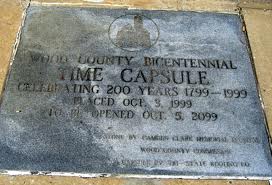
The idea behind this, of course, is that future generations will be able to learn about life in the past when they open up the capsule and study the objects.


As we have explained in the previous post, English has two articles: the and a/an. The is used to refer to specific or particular nouns; a/an is used to modify non-specific or non-particular nouns.

A and an is used to refer to a non-specific or non-particular member of the group. example:
- I would like a dog.
Here, we're not talking about a specific dog. We're talking about any dog.
I still haven't chosen one in particular.

A and an signal that the noun modified is indefinite, referring to any member of a group.
example:
- My brother really wants a cat. This also refers to any cat.

- When I was at the park, I saw a squirrel. Here, we're talking about a single, non-specific animal, in this case a squirrel. There are certainly several squirrels in the park, but there's only one we're talking about here.

NOTE:
using a or an depends on the sound that begins the next word.
    • a + singular noun beginning with a consonant: a girl; a truck; a bike; a park; a cat
    • an + singular noun beginning with a vowel: an elephant; an egg; an apple
    • a + singular noun beginning with a consonant sound: a user (sounds like 'yoo-zer,' i.e. begins with a consonant 'y' sound, so 'a' is used); also a university
    • an + nouns starting with silent "h": an hour
    • a + nouns starting with a pronounced "h": a horse

    If the noun is modified by an adjective, the choice between a and an depends on the initial sound of the adjective that immediately follows the article:
    • a broken ankle
    • an unusual job
    • a European country

    ALSO
    in English, the indefinite articles are used to indicate membership in a group:
    • I am a policeman. (I am a member of a large group known as police.)
    • Matt is an Irishman. (Matt is a member of the people known as English.)
    • Dave is a baseball player. (Dave is a member of the group of people known as Buddhists.)
    Best Blogger Tips

    giovedì 10 novembre 2011

    Thank you! :)


    A really big thanks to everyone who left a comment and for everyone who read the blog, thank you for your continued support. It means so much for me.

    More than 20 different languages were shared & posted as comments under My Happy Birthday Post, check out if is missing yours.. you can share it with others.. 


    "The fact that I can plant a seed and it becomes a flower, share a bit of knowledge and it becomes another's, smile at someone and receive a smile in return, are to me continual spiritual exercises."
    Leo.F. Buscaglia


    Luca
    Best Blogger Tips

    mercoledì 9 novembre 2011

    Happy Birthday!!! in all languages


    Today is my birthday, so if you want you can write HAPPY BIRTHDAY in your language in a comment!!
    In that way, all the followers of the blog will share their language..

    Sharing knowledge is the key to our own success...

    Best Blogger Tips

    Definite article: The

     
    Did you know? 

    A new study indicates that the total energy used to create and power LED lighting is less than that consumed by a traditional light bulb.


    English has two articles: the and a/an.  
    The is used to refer to specific or particular nouns; a/an is used to modify non-specific or non-particular nouns.

    The definite article the is the same for all genders in singular and in plural and is used when the noun is specific or particular.  
    example:
    - The last electricity bill was too much! We'll need to change our old incandescent bulbs with new LED efficient lamps
    Here, we're talking about a particular bill.

    - The ferry has just left the port. We missed it! 
    Here, we're talking about a specific boat, in a port

    - I am watching the last documentary of National Geographic .
    Here, we're talking about a specific documentary.

    The can be used with non-count nouns, or the article can be omitted entirely.
    example:
    - He spilled the drink all over the floor 
    (perhaps the drink I've just got him)
    or He spilled water all over the floor (any drink)

    We use the before:
    - names of rivers, oceans and seas: the Volga, the Indian Ocean

    - points on the globe: the Equator, the South Pole

    - geographical areas: the Middle East, the West

    - deserts, forests, gulfs, and peninsulas: the Gobi desert, the Persian Gulf, the Amazon rain-forest, the Italian Peninsula


    NOTE:
    Do not use the before:
    - names of most countries/territories: Italy, Spain, japan; however, the Cook Islands, the Galapagos Islands, the United States

    - names of cities, towns, or states: London, Paris, Berlin

    - names of streets: Las Vegas Blvd., Oxford Street

    - names of lakes and bays: Lake Victoria,  except with a group of lakes like the Great Lakes

    - names of mountains: Mount Everest, Mount Fuji except with ranges of mountains like the Andes or the Alps or unusual names like the Matterhorn (the Cervino)

    - names of continents: America, Africa, Europe
      - names of islands Sardinia, Corsica, Madagascar, Cuba, except with island chains like the Cook Islands, the Hawaii, or the Canary Islands

      Some common types of nouns that don't take an article are:
      - Names of languages and nationalities: English, Italian, Spanish, Chinese (unless we are referring to the population of the nation: "The Argentinians are known for their barbecue")

      -Names of sports: football, polo, baseball, hockey 

      - Names of academic subjects: Maths, Biology, Chemistry, Physics, Geography, History


      More examples, we say:
      • in general: the sky, the sea, the ground, the country, the environment, the same, the cinema, the theatre, the bank the post office
      • in a room: the radio, the light, the floor, the carpet, the window, the ceiling
        Best Blogger Tips

        lunedì 7 novembre 2011

        Be or Get used to something


        Micheal has a new job. He has to wake up much earlier now than before. He finds it difficult because isn't used to waking up so early.
        Now he has to get used to wake up so early.


        Be used to
        Be used to something means it is not new or strange for me: is used to show previous experience and familiarity with a certain situation. 
        example:
        - I am used to living abroad  
        (I have previous experience living abroad, so it's not difficult for me)

        - Mario is not used to living abroad 
        (He doesn't have much experience living abroad or he doesn't like it)

        - Lisa has never worked abroad, so she's not used to speak English constantly all day long 
        (Lisa doesn't have previous experience as working with foreign language)


        Get used to
        Get used to is used for the process of acquiring experience and ability. 
        In the beginning we are less experienced, then we get used to something: we got through a process of learning
        example:
        - I wasn't used to living abroad, but I got used to it 
        (I didn't have expeirence living abroad, but I grew in experience until I was happy living abroad.

        - I didn't like English breakfast, but I got used to it after a while.
        In the beginning I didn't like bananas, but after a while I learnt to like them.


        NOTE:
        In the structure be / get used to, to is a preposition, not part of the to-infinitive. For example:
        - I'm used to driving to to work everyday
        correct

        - I'm used to drive to work everyday.
        Incorrect - "to drive" is a to-infinitive and can't be used here.

        more examples:
        - It took me a while, but I'm finally used to using this new software
        - I'm getting used to the strange smell in the factory
        - I'll never get used to the heat in India

        - It was strange at first, but now I am used to China's food


        We wrote about the form: I used to in October you can see it at this link http://innovatenglish.blogspot.com/2011/10/used-to.html
        Best Blogger Tips

        sabato 5 novembre 2011

        Can, Could, Would You??


        It's five o'clock.
        Would you like a cup of tea? 


        All the auxiliary verbs except be, do and have are called modals.
        Unlike other auxiliary verbs modals only exist in their helping form; they cannot act alone as the main verb in a sentence.
        Be, do, and have also differ from the other auxiliaries in that they can also serve as ordinary verbs in a given sentence.

        The modal verbs are all those that we have described in the last posts:
        CAN, COULD, MAY, MIGHT, MUST, SHALL, SHOULD, OUGHT TO, WILL and WOULD
        Modals are commonly used for asking permission 
        examples:
        - Can I ask you an information? 
        - May I have a cup of tea? (may is always more formal) 
        - Could I open the window?
        Requests:
        we use can or could to ask people to do something:
        - Can you wait a moment please?
        - Could you wait a moment please?
        - Dave, can you do me a favor? 

        Asking for things: 
        - Can I have this magazine please? (in a shop) 
        - Could you pass me the oil please? (during a meal) 
        - May I have this book please?

        Asking to do things: 
        - Hello, can I speak to Laura please? (on the phone) 
        - Could I use your phone for a moment please?
        - May I come in?

        Offering to do things:
        - Can I get you a glass of water?
        - Can I help you?

        Offering and inviting: 
        - Would you like a cup of tea?
        - Would you like to come for lunch on Sunday?
        - I'd like to book a room, please.


        Best Blogger Tips

        giovedì 3 novembre 2011

        Would rather, Would Prefer


        "The world has limited resources.
        I'd rather recycle, than waste second hands materials"


        When we are talking about specifics, would rather is used as an alternative to would prefer to followed by an infinitive. 
        Would rather is very common in spoken English and is often abbreviated to 'd rather. 

        It is used in this form with all personal pronouns:

        I'd / you'd / he'd / she'd / we'd / they'd rather…


        examples dialogue: 
        - I don't have space at home to differentiate my rubbish.  
        - I'd rather think about how many raw materials you would save if you recycled

        - Nowadays, I'd rather make a change in the school organization system, to privilege teaching kids also what are the needing and requirements of this new society.

        NOTE
        Would rather is followed by a bare infinitive without to. 
        Would rather it can be followed by a past tense when we want to involve other people in the action, even though it has a present or future meaning. 

        examples:
        - Shall we go out for a drink this evening?  
        - No, I'd rather we ate at home, if you don't mind. 

        - Shall I write to Marco and tell him that we've planned our holiday?
        - I'd rather you didn't. 

        -My father would rather we went on holiday close to here, rather than going to South-Africa.

        ALSO
        Rather than means instead of and can be used in combination with would prefer to and would rather. 
        example: 
        - Rather than lose precious time discussing it now, I think we should go at the meeting and share our resolutions with the rest of the group.

        Would prefer
        Would rather and would prefer, can be used interchangeably. 
        When we are talking about general preferences, prefer is followed by verb-ing, 

        example:
        - I prefer listening to music to watching TV.  
        - I'd rather listen to music than watch TV. 

            Best Blogger Tips