Pagine

mercoledì 30 novembre 2011

Expressing preferences about the past

After a few requests I received, to write more post about verbs in past examples,  I decided to dedicate a couple of posts to Hypothetical Situations and Conditionals. This would be actually part of an Advanced Grammar Review, but it would certainly help those who want to get a good introduction to it.
Let's do it!


Matteo would have played with the video-games until the end of the summer.
He would have preferred to stay at home rather than going on holiday with his family.


People are often confused about how to discuss something that didn’t happen in the past.

The following structures can be used to express how we would like the past to have been different.
  • would like / love / prefer to + perfect infinitive or 
  • would have liked / loved / preferred to + infinitive or perfect infinitive
     example:
     - We would like to have stayed longer, but we had to take the bus to go back home.
     - I really would loved to tell her what I felt in that moment.
     or
     - I really would have loved to have told her what I felt in that moment.

It may happen, that the subject of would like, is not the same as the subject of the verb which follows, therefor an appropriate noun or object pronoun is inserted before the infinitive

example:
- I would have loved her to listen from my words, what I really felt for her, instead of reading it from a message on the mobile.

more examples:
- I would have loved to see his face when you told him, the holiday was cancelled because of him.

- I should have applied for the course in September, now is too late to take part in it.

- I could have told her another version of the story, but I decided to tell the truth. Best Blogger Tips

lunedì 28 novembre 2011

Unfulfilled past events


I was going to call you, yesterday evening, but the battery of my phone died unexpectedly


The following structures can be used to talk about events which were intended to take place, but which did not happen.

examples:
- I was going to call you, but my battery died.

- I was about to send you an email, when you called me.

- He was thinking of going to China, but he changed his mind and he went to Thailand.

- She had been thinking to buy a new car, but she decided to wait for a good second hand one.

- The meeting, which was to have taken place last Tuesday, was unexpectedly cancelled. Best Blogger Tips

mercoledì 16 novembre 2011

Names with and without The

Marbella is a town in Andalusia, Spain. 
It is situated on the Mediterranean Sea, in the province of Málaga, beneath the La Concha mountain.
Marbella and nearby Puerto Banús are important tourist resorts on the Costa del Sol. Marbella is especially popular with tourists from Northern Europe (including the UK, Ireland and Germany), Saudi Arabia, the United Arab Emirates and the U.S.A.


We do not use the with names of people ("Mark, Pedro, Carlos, Petra,.." etc.) and the with names of places (Asia, Mexico, Sardinia, London).

We use the in names of Republic, Kingdom, States:
- the Dominican Republic
- the United Kingdom
- the United States of America

  example:
  - Have you ever been to Canada or the United States?

COMPARE:
not using the:                                              using the:
- Mount Kilimajaro                                    
- Mount Everest
- I live near Lake Victoria         - I live near the lake
                                                              - the Atlantic Ocean
                                                              - the Mediterranean Sea
                                                              - the Sahara Desert
                                                              - the Gobi Desert
- We went to doctor Smith        - we went to the doctor
                                                              - the Rockefeller (the Rockfeller family)
                                                              - the MacMillan (the MacMillan family)
- northern Italy                              - the north of Italy
- south-eastern Argentina           - the south-east Argentina
- Scotland is in northern Europe   - Sicily is in the south of Europe
- north America
- south America
- Regent's park
- Queen's park
- Wall street
- Time Square
- Victoria Station
- Buckingham Palace                    - the Royal Palace (royal is adjective here)
                                                               - the Empire State Building
                                                               - the White House
                                                               - the Eiffel Tower
                                                               - the Pentagon
- Cambridge University               - the University of Cambridge
- Kodak    (names of companies don't take the)
- Siemens
- Sony Best Blogger Tips

venerdì 11 novembre 2011

Indefinite article: A/an

Did u know?

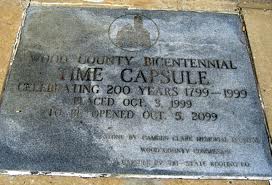
A time capsule is a container filled with typical objects from a particular time and in most cases buried underground for safekeeping.

The idea behind this, of course, is that future generations will be able to learn about life in the past when they open up the capsule and study the objects.


As we have explained in the previous post, English has two articles: the and a/an. The is used to refer to specific or particular nouns; a/an is used to modify non-specific or non-particular nouns.

A and an is used to refer to a non-specific or non-particular member of the group. example:
- I would like a dog.
Here, we're not talking about a specific dog. We're talking about any dog.
I still haven't chosen one in particular.

A and an signal that the noun modified is indefinite, referring to any member of a group.
example:
- My brother really wants a cat. This also refers to any cat.

- When I was at the park, I saw a squirrel. Here, we're talking about a single, non-specific animal, in this case a squirrel. There are certainly several squirrels in the park, but there's only one we're talking about here.

NOTE:
using a or an depends on the sound that begins the next word.
    • a + singular noun beginning with a consonant: a girl; a truck; a bike; a park; a cat
    • an + singular noun beginning with a vowel: an elephant; an egg; an apple
    • a + singular noun beginning with a consonant sound: a user (sounds like 'yoo-zer,' i.e. begins with a consonant 'y' sound, so 'a' is used); also a university
    • an + nouns starting with silent "h": an hour
    • a + nouns starting with a pronounced "h": a horse

    If the noun is modified by an adjective, the choice between a and an depends on the initial sound of the adjective that immediately follows the article:
    • a broken ankle
    • an unusual job
    • a European country

    ALSO
    in English, the indefinite articles are used to indicate membership in a group:
    • I am a policeman. (I am a member of a large group known as police.)
    • Matt is an Irishman. (Matt is a member of the people known as English.)
    • Dave is a baseball player. (Dave is a member of the group of people known as Buddhists.)
    Best Blogger Tips

    giovedì 10 novembre 2011

    Thank you! :)


    A really big thanks to everyone who left a comment and for everyone who read the blog, thank you for your continued support. It means so much for me.

    More than 20 different languages were shared & posted as comments under My Happy Birthday Post, check out if is missing yours.. you can share it with others.. 


    "The fact that I can plant a seed and it becomes a flower, share a bit of knowledge and it becomes another's, smile at someone and receive a smile in return, are to me continual spiritual exercises."
    Leo.F. Buscaglia


    Luca
    Best Blogger Tips

    mercoledì 9 novembre 2011

    Happy Birthday!!! in all languages


    Today is my birthday, so if you want you can write HAPPY BIRTHDAY in your language in a comment!!
    In that way, all the followers of the blog will share their language..

    Sharing knowledge is the key to our own success...

    Best Blogger Tips

    Definite article: The

     
    Did you know? 

    A new study indicates that the total energy used to create and power LED lighting is less than that consumed by a traditional light bulb.


    English has two articles: the and a/an.  
    The is used to refer to specific or particular nouns; a/an is used to modify non-specific or non-particular nouns.

    The definite article the is the same for all genders in singular and in plural and is used when the noun is specific or particular.  
    example:
    - The last electricity bill was too much! We'll need to change our old incandescent bulbs with new LED efficient lamps
    Here, we're talking about a particular bill.

    - The ferry has just left the port. We missed it! 
    Here, we're talking about a specific boat, in a port

    - I am watching the last documentary of National Geographic .
    Here, we're talking about a specific documentary.

    The can be used with non-count nouns, or the article can be omitted entirely.
    example:
    - He spilled the drink all over the floor 
    (perhaps the drink I've just got him)
    or He spilled water all over the floor (any drink)

    We use the before:
    - names of rivers, oceans and seas: the Volga, the Indian Ocean

    - points on the globe: the Equator, the South Pole

    - geographical areas: the Middle East, the West

    - deserts, forests, gulfs, and peninsulas: the Gobi desert, the Persian Gulf, the Amazon rain-forest, the Italian Peninsula


    NOTE:
    Do not use the before:
    - names of most countries/territories: Italy, Spain, japan; however, the Cook Islands, the Galapagos Islands, the United States

    - names of cities, towns, or states: London, Paris, Berlin

    - names of streets: Las Vegas Blvd., Oxford Street

    - names of lakes and bays: Lake Victoria,  except with a group of lakes like the Great Lakes

    - names of mountains: Mount Everest, Mount Fuji except with ranges of mountains like the Andes or the Alps or unusual names like the Matterhorn (the Cervino)

    - names of continents: America, Africa, Europe
      - names of islands Sardinia, Corsica, Madagascar, Cuba, except with island chains like the Cook Islands, the Hawaii, or the Canary Islands

      Some common types of nouns that don't take an article are:
      - Names of languages and nationalities: English, Italian, Spanish, Chinese (unless we are referring to the population of the nation: "The Argentinians are known for their barbecue")

      -Names of sports: football, polo, baseball, hockey 

      - Names of academic subjects: Maths, Biology, Chemistry, Physics, Geography, History


      More examples, we say:
      • in general: the sky, the sea, the ground, the country, the environment, the same, the cinema, the theatre, the bank the post office
      • in a room: the radio, the light, the floor, the carpet, the window, the ceiling
        Best Blogger Tips